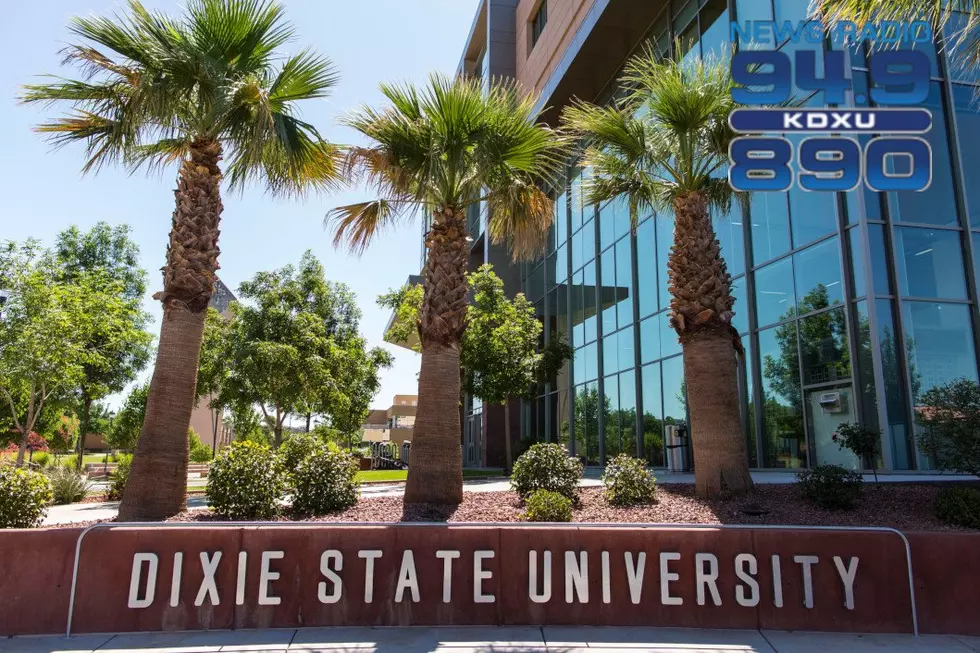
Dixie State University, Atwood Innovation Plaza companies helping with COVID-19 pandemic
As the nation continues to
grapple with the effects of the COVID-19 outbreak, Dixie State University and
several companies linked to the institution’s Atwood Innovation Plaza are
helping Utah communities respond to the pandemic.
Steribin, a St. George-based
start-up company that launched from Atwood Innovation Plaza and continues to
lease space from Southern Utah’s hub for innovation and entrepreneurism, is
partnering with the City of St. George to disinfect the personal protective
equipment used by many of the city’s employees and first responders.
The company’s patent-pending
device was originally developed to reduce the spread of bacteria and viruses in
airports by sanitizing security bins in seconds; however, with the spread of
COVID-19, the company is using its high-intensity pulse-lighting device to set
up a mobile workstation in St. George.
"Our device can play an integral
part in reducing the spread of viruses and bacteria at airports worldwide, and
we're grateful to be able to use it to help our local community during this
time of need," Jon Cole, CEO of Steribin, said.
Another Atwood Innovation
Plaza company, Soft Cell Biological
Research, a public-private partnership based in the plaza, is collecting
COVID-19 samples at their testing facility located at 4616 Beehive Drive in St.
George. Soft Cell, which offers saliva or nasal swab testing with 24-hour
turnaround and reporting for $75, can process 2,500 tests per day and expects
to be able to process 15,000 tests per day by June. Additionally, the company
offers remote testing for at least 10 individuals for $100 a test and they do
accept insurance.
“Antibody testing alone for COVID-19 is a coin
flip at best, according to the most recent studies,” Brent Hunt, CEO and
founder of Soft Cell, said. “Genetically based testing is the only true method
currently available that can determine if the virus is still active within
one’s body — and this is what we do.”
Dixie State’s academic
departments are also contributing to the relief efforts.
Engineering Department Chair David Christensen and his student-interns are
3D printing ventilator splitters so healthcare facilities can use one
ventilator on multiple patients at a time, if necessary. Additionally, the team
is creating face shields that can be attached to HEPA filters for healthcare
facilities around the state.
The effort is taking
advantage of the department’s 24 3D printers that engineering students start
using on their first day of coursework. The Dixie State Engineering Department,
which offers bachelor’s degrees in Mechanical Engineering, Electrical Engineering
and Computer Engineering, includes active learning courses that provide design
experiences every year of the program and reinforce student learning with lab
courses every semester.
Additionally, Dixie State’s
College of Science, Engineering and Technology has teamed up with the
university’s American Medical Women's Association and Dixie Pre-Medical
Alliance to offer elementary students the opportunity to participate in STEM
learning from home. As part of this effort, Dixie State premedical students created
science videos on topics ranging from hand washing to DNA and microscopy and
posted them at stem.dixie.edu. The students are assembling materials necessary
to participate in the activities demonstrated in the videos and giving them to
elementary students at Title I schools in Washington County in coordination
with meal distributions.
“Thanks to Dixie State
University, the amazing professors and staff, and also to my fellow premedical
students, we have been able to continue bringing fun science projects to kids
who want to do them,” Jessikah Johnson, a premedical student at Dixie State,
said. “Even a global pandemic can’t stop us from spreading our love of science
to the world.”
More From 106.1 KDXU